Introduction
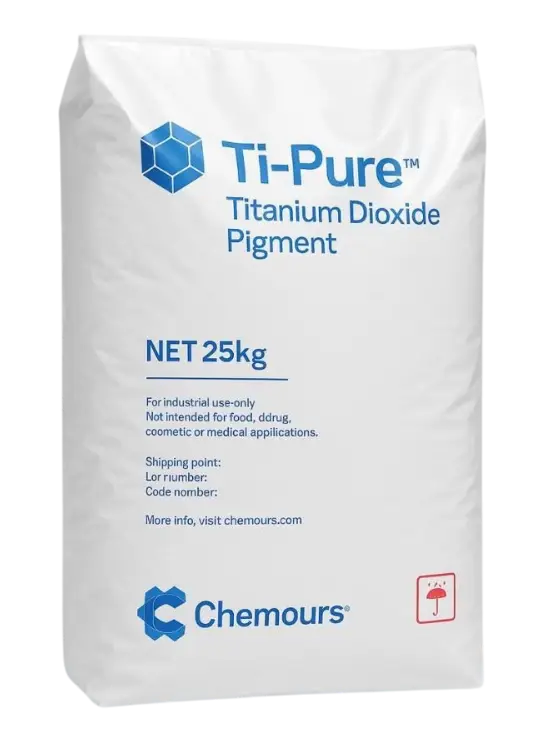
The world of coatings has its own tale to tell, where the finesse and durability of a finish depend not only on the components but also on the interactions that take place between them. Among the various components that interact, Titanium Dioxide (TiO₂) is the most important one. Its remarkable whiteness, opacity, and light scattering capacity make it the favorite of most paints and coatings — ranging from decorative emulsions to high-performance automotive finishes.
However, even the highest quality Titanium Dioxide Distributor cannot exhibit its full potential unless it is correctly dispersed. Dispersion is not merely a process of mixing pigment with a liquid; it involves the meticulous balancing of the chemical, physical, and processing aspects. Bad dispersion leads to the loss of pigment, reduction of opacity, dullness of gloss, and lesser durability. Conversely, proper dispersing reveals the whole magnificence, efficiency, and performance of TiO₂.
Why Dispersion Matters
Dispersion is a term used to denote the action of distributing solid particles — titanium dioxide (TiO₂) being an example of such — uniformly throughout the coating medium. When TiO₂ is incorporated into paint, it does not spread out evenly at once; on the contrary, it gets clumped together because of very strong surface forces. The light scattering area that these clumps or agglomerates occupy is less which, in turn, results in the lower hiding power of the coating.
It is necessary to crush these agglomerates into particles of the smallest possible size — preferably the size of primary particles — and then to stabilize them so that they do not come together again to get a uniform distribution. A system that is properly dispersed not only has the advantage of superior opacity and gloss, but it also remains stable during the time of storage and application. To sum up, dispersion quality determines the extent to which every kilogram of TiO₂ can contribute to the coating’s optical performance.
The Science Behind TiO₂ Dispersion
Naturally, Titanium Dioxide particles have a high surface energy, which leads to their mutual attraction. This is the main reason why they are likely to form clusters if the situation is not properly handled. To combat this, the dispersion process consists of three main stages: wetting, deagglomeration, and stabilization.
During wetting, the liquid medium takes the place of the air and moisture that were previously around the TiO₂ particles. Good wetting makes it possible for the pigment to be in close contact with the resin or solvent that is in the liquid. The next step is deagglomeration, which is where mechanical energy is used to break down larger clusters into smaller ones with the help of high-shear mixers or mills. The last step is stabilization, in which the pigment surface is coated by dispersing agents or surfactants, thus creating a barrier that prevents the particles from coming back together again.
Each step needs to synchronize. In case wetting is not done perfectly, even the best mill will find it difficult to disperse the pigment completely. If fixation is not done properly, the system may appear to be okay in the beginning, but will eventually flocculate, thereby reducing gloss and consistency.
Surface Treatment and Compatibility
Commercial Titanium Dioxide is usually covered with materials like alumina, silica, or zirconia to alter its surface characteristics. These coatings make the TiO₂ better dispersible, less photoactive, and more compatible with other binder systems.
The TiO₂ grade selection should always be linked to the coating type being manufactured. Hydrophilic grades are applicable for waterborne systems, and hydrophobic grades are suitable for solvent-based or UV-curable formulations. One of the most crucial steps in getting easy dispersion and permanent stability is picking up the right additives from your distributor.
Formulation and Processing Techniques
Excellent dispersion can be achieved only through proper formulation design at the very beginning. The addition of ingredients in the right sequence, the type of dispersing agent, and the equipment used are the three factors that determine the success of the process.
In many coating systems, Titanium Dioxide is slowly added to the liquid medium while stirring under tight control. The premixing process helps to distribute the pigment evenly before high-shear dispersion starts. The use of properly formulated wetting and dispersing agents is a must, as by doing so, they reduce the interfacial tension between pigment and resin and thus ensure complete particle coverage.
The grinding or milling process gives the required mechanical energy to break apart agglomerates. If energy input is too low, the result will be incomplete dispersion, whereas if it is too high, overgrinding will occur, where both the pigment and the binder molecules are broken down, resulting in loss of gloss or instability. The application of energy should not be at maximum, but rather optimal and specific to the coating system.
For waterborne systems, pH control is just as crucial. A pH range of 8–9 is slightly alkaline and is the condition most TiO₂ dispersions are made in, since it is a convenient way of preventing flocculation. Also, temperature impacts wetting and resin behavior — mild heat can increase dispersion efficiency, but the risk of resin or dispersant being affected adversely is the downside of high temperature.
Pitfalls That Undermine TiO₂ Dispersion
Even though the highest quality materials are used, sometimes the production process or the composition is the main reason for unfit final products. To mention one of the most frequent problems, there is inadequate wetting, which means that the pigment can’t merge with the resin system completely, resulting in very small air pockets that make the coating less opaque. There is also another problem – over-grinding, which is an unexpected issue, as, besides the mechanical energy, the system gets about 40% of its grinding power, leading to nothing but particle re-agglomeration and uneven gloss.
The employment of the wrong type and/or amount of dispersant can result in instability just the same way. The dispersant is required to be very tightly bound to the TiO₂ particle and to remain compatible with the resin. If it gets detached, then the pigment particles can stick together, and this can result in inconsistent colors and poor film formation.
Lastly, choosing an incompatible Tio₂ grade can, for example, a hydrophilic pigment in a solvent-based coating result in severe dispersion difficulties. The pigment’s surface chemistry should be aligned with the resin system’s surface chemistry for the purpose of getting uniform wetting and long-term stability.
Dispersion in High-Performance Coatings
Dispersion quality is even more crucial in high-performance coatings like, for example, automotive, marine, aerospace, or industrial finishes, where the application is done under the most stringent standards for gloss retention, UV resistance, and color uniformity. Poorly dispersed pigment systems can lead to visibility defects, uneven film thickness, or premature degradation under exposure.
For these applications, fine and stable dispersion must be produced with both precision and expertise. Mixing and bead milling usually make up the process under very stringent conditions that are a combination of high-shear mixing and bead milling. Specialized dispersants are used to keep every particle of TiO₂ separated and surrounded by the resin matrix.
Particle size analyzers or gloss meters, for instance, are examples of monitoring tools that assist manufacturers in verifying that dispersion has reached the required level. Once optimized, these systems produce coatings that not only appear immaculate but also continue to resist fading, chalking, and weathering due to old age over an extended period of time.
Balancing Cost and Performance
The economic effectiveness of a coating formulation is directly influenced by the dispersion. Titanium Dioxide is one of the leading contributors to the overall cost of paint manufacturing; thus, the proper utilization of it brings direct cost advantages.
The use of less pigment to reach the same opacity is one of the benefits of the good dispersion of TiO₂. This leads to the use of fewer raw materials, the need for lower viscosity adjustment and better energy efficiency in the production process. On the other hand, poorly dispersed systems lose pigment and need to increase the amount of pigment to attain the desired coverage.
To sum it up, the optimization of dispersion is not just a technical issue but a financial one as well. The uniform dispersion leads to a reduction in reprocessing, an increase in shelf life, and a guarantee of the same quality across different batches – all of these factors result in better profit margins for coating manufacturers.
Sustainability and Safety Considerations
Sustainability has become a non-negotiable in the coatings sector today. Proper mixing helps the planet by cutting down on waste, prolonging the life of coatings, and making repainting less necessary. Coatings that are needed less often mean a reduced environmental impact.
Moreover, the safe management of Titanium Dioxide in the manufacturing process is of utmost importance. The application of dust-free or pre-dispersed TiO₂ slurries can be beneficial for safety as well as dispersion effectiveness. Environmentally responsible sourcing is what we at Aanya Enterprise offer in the first place, and the surface-treated TiO₂ grades we deal in are the ones that further the goals of easy dispersion, stable formulations, and low health risks.
The Role of Expertise and Partnership
Dispersion is the key to unlocking the full potential of Titanium Dioxide in coatings. It is both a science and an art—demanding a very thorough knowledge of pigment, resin, and process interactions. An ideally dispersed TiO₂ system provides opacity to the highest level possible, gives more gloss, color uniformity, and durability, but at the same time lowers production costs.
When manufacturers prioritize surface compatibility, process optimization, and careful additive selection, they can consistently produce high-quality coatings that are able to satisfy the modern performance standards.
Aanya Enterprise has this commitment in mind, and it is the supplier of the highest-grade Titanium Dioxide specially designed for every application. With our knowledge and product line, you will be able to confidently produce coatings that are not just brighter, stronger, and more durable but also that really reflect the quality of your brand.
Conclusion
Dispersion is the key to unlocking the full potential of Titanium Dioxide in coatings. It is both a science and an art—demanding a very thorough knowledge of pigment, resin, and process interactions. An ideally dispersed TiO₂ system provides opacity to the highest level possible, gives more gloss, color uniformity, and durability but at the same time lowers production costs.
When manufacturers prioritize surface compatibility, process optimization, and careful additive selection, they can consistently produce high-quality coatings that are able to satisfy the modern performance standards.
Aanya Enterprise has this commitment in mind, and it is the supplier of the highest-grade Titanium Dioxide specially designed for every application. With our knowledge and product line, you will be able to confidently produce coatings that are not just brighter, stronger, and more durable but also that really reflect the quality of your brand.