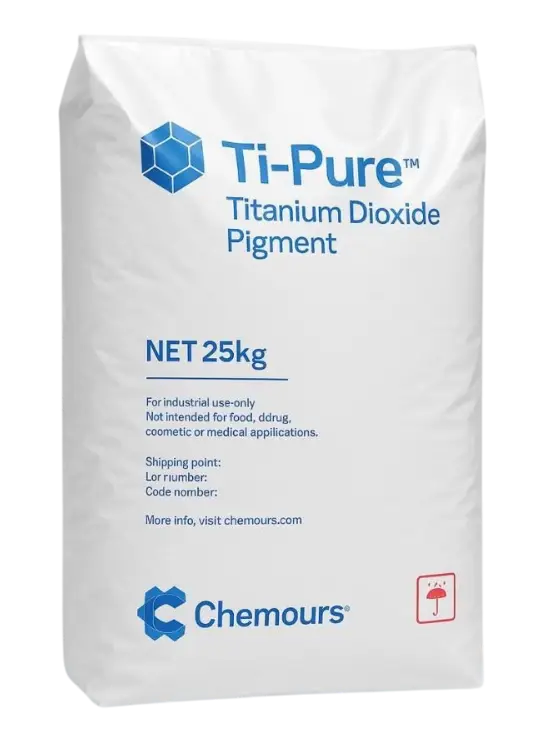

Titanium Dioxide (TiO₂) is one of the most useful pigments that is valued highly across various sectors because of its remarkable whiteness, opacity, and UV protection properties. It can be found in every major manufacturing sector, from paints and coatings to plastics, paper, and cosmetics ,giving bright, durable, and weather-resistant products.
In India, where the industrial and construction sectors are experiencing rapid growth, the need for Titanium Dioxide is increasing massively. However, the question among the producers and customers is whether it is more advantageous to use Titanium Dioxide that is locally produced or that which is imported.
As one of the major Titanium Dioxide distributors in India, Aanya Enterprise is going to analyze the subject matter from different angles—discussing the impact of cost, quality, logistics, and sustainability on sourcing decisions in the highly competitive TiO₂ market.
India’s Titanium Dioxide Landscape
Titanium Dioxide market in India is on the threshold of an important decision. Although domestic manufacturing has been progressively increasing during the last twenty years, it is, however, not yet able to cover the whole country's growing demand. Some companies like KMML and TTPL still stand as the main local producers, but the disparity between local supply and national consumption keeps increasing.
Consequently, India has to depend a lot on imports from China, Malaysia, Germany, and South Korea to satisfy industrial demand. The mix of domestic production and imported supply characterizes the current state of India’s Titanium Dioxide market—a market that offers a balance between cost efficiency and quality of the product, along with its consistency.
Understanding Titanium Dioxide Pricing in India
The price of Titanium Dioxide in India is determined by several factors. The local TiO₂ production mainly utilizes the sulfate method, which is economical, but the pigment produced has slightly lower brightness and purity as compared to the pigment obtained through the chloride process, which is mainly used in the TiO₂ production for exports.
At present, the cost of TiO₂ in India for domestic sulfate grades ranges from ₹230 to ₹280 per kilogram, whereas the imported chloride grades are priced from ₹260 to ₹350 per kilogram. The price difference does not look significant, but when one considers the factors of optical efficiency and coverage power, imported grades may sometimes offer better value for money.
Nevertheless, local manufacturers enjoy the advantage of lower transport and duty charges. They do not have to pay import tariffs or bear the costs of long-distance shipping, which is why the price of locally procured Titanium Dioxide is usually more consistent.
Local vs Imported Titanium Dioxide – The Real Cost Comparison
The difference between locally and imported Titanium Dioxide is not only the price per kilogram but also the performance cost in total. TiO₂ produced in the local area is more affordable, readily available, and easy to handle logistically. It is very suitable for industries like paper, PVC, and general-purpose coatings that are sensitive to supply continuity and volume.
Imported Titanium Dioxide, though at a higher cost, has better dispersion, increased tinting strength, and longer-lasting quality. This indicates that less pigment loading is usually required by the manufacturers for the same color opacity or brightness, which in turn, counters the higher initial cost.
Thus, the cost comparison is directly tied to the application preferences:
- Locally sourced TiO₂ assures stability and accessibility for the price-sensitive sectors.
- On the other hand, imported TiO₂ gives greater value through efficiency and product lifespan for performance-driven products like automotive coatings, plastics, and cosmetics.
The Role of Logistics and Market Volatility
The titanium dioxide price fluctuations in India are predominantly linked with the logistics and currency dynamics. The price of imported TiO₂ is directly connected with the global ocean freight rates, customs duties, plus currency exchange rates. The landed cost of imported Titanium Dioxide during global shipping disruptions or currency depreciation can rise steeply.
By contrast, local sourcing protects against these international factors. The local supply chains for small and mid-sized manufacturers mean shorter lead times, reliable delivery schedules, and less working capital tied up in inventories.
However, when global conditions are back to normal, imports may become competitive, especially when the international producers are selling under bulk pricing and offering superior grades.
Quality and Performance Considerations
In the Indian Titanium Dioxide market, quality is frequently the determining factor. Generally, imported chloride-grade TiO₂ offers better whiteness, opacity, and weather resistance. It is used extensively in outdoor paints, automotive finishes, and high-end plastics where UV resistance and gloss retention are of utmost importance.
Domestic TiO₂'s quality is going up quickly but it is still mainly for low and medium-grade applications. This gap has become smaller with the help of Indian producers who are upgrading the technology and investing in modern surface treatment processes for better brightness, dispersibility, and durability.
For the industries that need to balance cost and performance, a combination of sourcing strategy — local TiO₂ for base formulations and premium products with imported grades — is often the most efficient way to go.
Environmental and Sustainability Factors
Sustainability is becoming a key factor in Titanium Dioxide sourcing. Imported TiO₂ from Europe or Japan often carries a smaller environmental footprint due to cleaner manufacturing technologies. However, local sourcing reduces emissions related to long-distance transportation and supports domestic mineral utilization.
Indian producers are progressively adopting more eco-friendly practices — upgrading to energy-efficient plants, reducing effluent discharge, and recycling waste acids from the sulfate process. This shift aligns with India’s broader Atmanirbhar Bharat vision of achieving industrial self-sufficiency with environmental responsibility.
Strategic Sourcing: Finding the Right Balance
Choosing between locally sourced and imported Titanium Dioxide should be a strategic decision, based on technical requirements and cost dynamics. Local TiO₂ offers predictable pricing and secure supply, while imported TiO₂ provides high-end performance and quality assurance.
The most successful manufacturers in India use a blended sourcing model, optimizing both supply chains. They source local TiO₂ for bulk needs and rely on imported grades for specialized formulations. This approach minimizes risk, maintains consistent production quality, and controls costs even during volatile market periods.
Aanya Enterprise: Your Trusted Titanium Dioxide Partner
As a reputed Titanium Dioxide distributor in India, Aanya Enterprise bridges the gap between local availability and global quality. We offer a curated portfolio of both Indian-manufactured TiO₂ and imported grades from trusted international producers.
Our goal is to help clients select the right Titanium Dioxide for their formulation — balancing price, performance, and sustainability. Whether it’s for coatings, plastics, paper, or cosmetics, Aanya Enterprise ensures consistent quality, timely supply, and transparent cost structures.
With years of industry experience and a strong distribution network, we make it easier for manufacturers to navigate the complex Titanium Dioxide market in India with confidence.
Conclusion
The cost comparison between locally sourced and imported Titanium Dioxide in India is not about choosing one over the other — it’s about finding the right equilibrium. Local TiO₂ offers price stability and faster availability, while imported grades provide superior optical performance and long-term durability.
As India’s production technology advances, the future will likely bring greater self-reliance and improved quality from domestic sources. Yet, global trade will continue to play an essential role in ensuring innovation and competitiveness.
Through its expertise and commitment, Aanya Enterprise remains dedicated to helping industries strike that perfect balance — delivering Titanium Dioxide solutions that combine affordability, quality, and reliability for every application.