Introduction
Titanium Dioxide (TiO₂) has been one of the most efficient and versatile white pigments globally for a long time. It is brightness, opacity, and stability that make it a major player in the fields of paints, plastics, paper, food, and pharmaceuticals that cannot be replaced. For a long time, it has been the colorant, the food additive code E171, being its common name, which gives the products a pure white look and at the same time enhances their resistance to light.
Nonetheless, the time to come has proved to be challenging for Titanium Dioxide as it got caught up in the regulatory scrutiny to a great extent. The health concerns connected to it, especially the nanoparticle forms, caused the authorities to pull back and reconsider its safety. It is the responsibility of the manufacturers, distributors, and buyers to be well aware of the regulations to ensure compliance and not lose the consumers’ trust.
The leading Titanium Dioxide distributor in India, Aanya Enterprise, in this article, takes a look at the changing global regulatory landscape for TiO₂ in food and pharmaceutical applications and what supply chain stakeholders need to know.
Titanium Dioxide: A Brief Overview
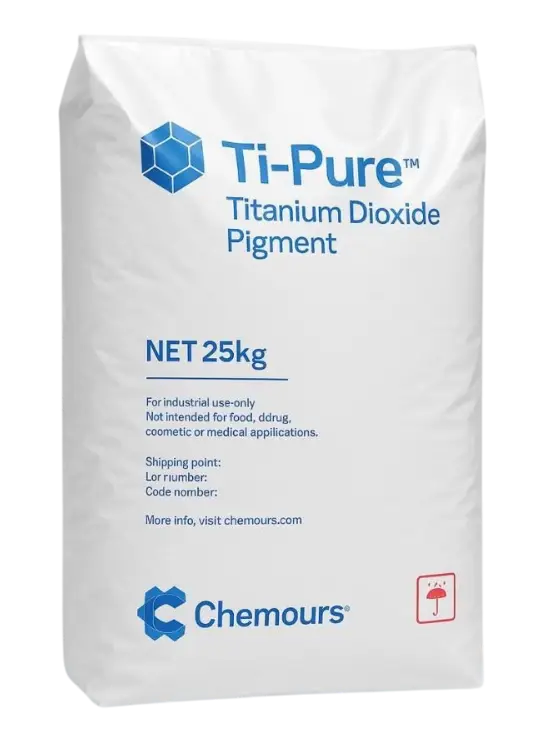
Titanium Dioxide is a mineral compound composed of titanium and oxygen that is widely recognized for its exceptional whiteness and great refractive index. In the past, the color of food products was enhanced by the use of this compound in the form of a whitening, opacifying agent in lollipops, chewing gums, bread, sauces, and milk substitutes. In the case of pharmaceuticals, TiO₂ has a dual function; it serves both as a colorant in tablets and capsules and as a barrier against UV degradation in light-sensitive formulations.
Because of its stability, chemical inertness, and poor solubility, it has been the most common additive for many years. On the other hand, nanotechnology and better toxicity studies have led to the conclusion that different particle sizes and levels of exposure might affect the safety outcomes and the need for regulators to investigate further.
The European Union: From Approval to Ban
The most important change in regard to Titanium Dioxide regulation took place in the European Union (EU). By and large, TiO₂ was permitted as E171 for being a food additive. Nevertheless, in 2021, the European Food Safety Authority (EFSA) released a renewed safety assessment, which said that the substance could not be regarded as safe when used in food anymore.
EFSA's main worry was about possible human genetic damage caused by TiO₂ particles, especially those in the nanosized category, —genotoxicity. Still, though it was certain that there was no proof of human harm, the Authority cited that the ambiguities were so major that confidence in the safety could not be justified.
As a result of the EFSA's suggestion, the European Commission enacted Regulation (EU) 2022/63, which made it illegal to use Titanium Dioxide (E171) in foodstuffs from August 2022 onwards. The EU provided a grace period of six months to enable the withdrawal of products that contained TiO₂ from the market.
Despite this, the prohibition applies at this point only to the food industry; there is still no ban for pharmaceutical or cosmetic products, where further risk assessments are taking place. At this moment, TiO₂ is still allowed in medicinal products in the EU; however, the European Medicines Agency (EMA) is still scrutinizing the safety data and considering the options for replacements.
The United States: FDA’s Stance
Unlike Europe, the U.S. Food and Drug Administration (FDA) still insists that the use of Titanium Dioxide in food and drugs within certain limits is safe. According to 21 CFR §73.575, TiO₂ is allowed as a color additive in food with a maximum concentration of 1% by weight of the food.
FDA considers TiO₂ as chemically inert and severely absorbed in the digestive tract; therefore, when properly used, it is a health risk of negligible value. In the same manner, in the case of pharmaceuticals and cosmetics, TiO₂ still gets the label of a generally safe excipient and UV filter.
At the same time, the FDA and other regulatory authorities keep an eye on the newly forming research on nano-TiO₂. Although it has not moved towards a prohibition, it promotes clarity in labeling and compliance with good manufacturing practices to ensure the consistency of particle size distribution and purity.
India’s Regulatory Position
In the country of India, Titanium Dioxide is under the regulation of the Food Safety and Standards Authority of India (FSSAI), which oversees and regulates through the Food Safety and Standards (Food Products Standards and Food Additives) Regulations, 2011. The pigment is identified as an allowed colorant (INS 171) in certain food categories such as sweets, gums, and processed food, with a maximum limit.
Currently, India has not prohibited the use of TiO₂ in foods, but the regulatory conversations have gained more noise after the EU's ruling. The FSSAI has made it known that it would continue to look at what is going on in the world in terms of scientific studies and local usage before any policy changes.
Titanium Dioxide is still very much regarded as a safe excipient in the pharmaceutical industry, where it continues to be a component of the Indian Pharmacopoeia for coating tablets and shells of capsules. Indian producers still turn to Titanium Dioxide for its coloring and protection properties, especially for drugs sensitive to light.
Other Global Perspectives
Regulatory measures are quite different in various areas.
- With the Food Standards Code under review, Australia and New Zealand still permit the use of TiO₂ as a food additive.
- The Health Canada agency from Canada has continued its approval of TiO₂ for both food and drug use, declaring that the current data do not pose any major safety issues.
- Although Japan does not prohibit the use of TiO₂ in food or drug preparations, it is closely observing the international studies that are being conducted.
All these factors contribute to a global trade scenario that is not easy to navigate. Manufacturers whose products are to be sold in different regions have to keep in mind the local regulations that can vary in terms of concentration limits, labeling requirements, and definitions of particle size, among others.
Pharmaceutical Use: Safety and Functionality
The role of Titanium Dioxide in pharmaceuticals is critical, and its immediate substitution is quite difficult due to its functional characteristics. It not only makes the drug visually appealing but also provides a barrier against UV rays, thus preventing light-induced degradation of active pharmaceutical ingredients (APIs). The presence of pharmaceuticals on the market for a long time is an index of stability in terms of shelf life and medical efficacy.
Moreover, TiO₂ contributes to the blending of colors and the product's visibility in the market, thereby assisting in the differentiation of products and even covering unpleasant flavors. The safety of TiO₂ is beyond doubt and its extensive use makes it acceptable to most health authorities as an excipient.
On the contrary, the European Medicines Agency has suggested that drug manufacturers should, as a protective measure, work on developing alternative formulations wherever practical. Any withdrawal that is likely to happen in the future would entail a painstaking reformulation process and a supply chain disruption for generic drug manufacturers.
Safety Data and Ongoing Research
Most of the worries regarding Titanium Dioxide are connected to exposure to nanoparticles. Nano-sized TiO₂ (particles smaller than 100 nm) might have different properties than larger particles, such as being more reactive and having a higher chance of interaction with cells.
The results of toxicological studies have not been consistent. On one hand, high-dose inhalation studies in rodents have shown inflammatory reactions, while on the other hand, oral ingestion studies in humans and animals have usually been associated with poor absorption and low systemic toxicity. The World Health Organization (WHO) and FAO Joint Expert Committee on Food Additives (JECFA) had previously considered TiO₂ to have “no appreciable health risk” when consumed within specified limits.
Studies are still ongoing, looking at the possibility of long-term exposure and bioaccumulation, notably for the most vulnerable groups of the population. Until a clear agreement is reached, regulators are expected to adopt a cautious yet evidence-based approach — permitting limited use while keeping an eye on the results of studies that are being conducted.
Implications for Suppliers and Buyers
The changing regulatory landscape is a constant reminder for suppliers and buyers of Titanium Dioxide to always be on the lookout and to be transparent. Not only must the suppliers guarantee that the TiO₂ grades they supply meet the purity and particle size standards, but they also have to make certain that the grades are in accordance with the latest national regulations.
Documentation such as CoAs, MSDSs, and regulatory declarations has become a requirement for manufacturers that are down the line to possess so as to get compliance validation. On the other hand, buyers have to evaluate the products that they are dealing with and see where Titanium Dioxide is included, assuring that the exports to the market do not violate the regulations and are up to the expectations of the market.
In the EU and some other markets, white pigments alternative to TiO₂, such as calcium carbonate, zinc oxide, or starch-based opacifiers, are being investigated; however, none have yet been found to possess the same combination of brightness, stability, and performance that TiO₂ does. Therefore, companies in the supply chain must find a way to comply with the regulations and, at the same time, not compromise on the technical aspect.
Aanya Enterprise’s Commitment to Compliance and Quality
Aanya Enterprise recognizes that upholding regulatory integrity is a critical factor in global trade. Being the most reliable Titanium Dioxide distributor in India, we are responsible for the combination and supply of TiO₂ grades that meet the requirements of international standards such as FDA, FSSAI, BIS, and Pharmacopoeia.
By working in collaboration with the client and manufacturer, we ensure that each batch conforms to the requirements of purity, particle size, and safety with a high degree of specificity. Our selection consists of both rutile and anatase grades, which can be used for applications in food, pharma, and personal care products.
In addition, we provide our clients with technical data and other documents as a part of our service that will help them with the regulatory submissions and audits, thus keeping the clients in full compliance while the product performance is being optimized.
Aanya Enterprise is still committed to transparency, quality assurance, and proactive communication even in a setting where regulations change frequently. So suppliers and buyers stay informed and compliant.
Conclusion
Navigating through the regulatory maze of Titanium Dioxide for food and pharmaceuticals has become really tough and tricky. Europe has imposed a ban on the use of the substance in food, but the majority of the world is allowing it — the U.S., India, and Asia-Pacific — all permitting TiO₂ in certain amounts. Its excellent efficacy as a pharmaceutical ingredient, coupled with the safety record it has built over time, still justifies its use, though monitoring is done worldwide for compliance.
Suppliers, distributors, and buyers must stay up-to-date with the changes. Compliance is not only about being aware of the present regulations but also being ready for the future ones. By keeping their product quality high and their documentation clear and open, the stakeholders can traverse this changing landscape with self-belief.
As the debate surrounding the use of Titanium Dioxide gradually dissipates, Aanya Enterprise will still remain a trustworthy partner—assuring regulatory compliance, quality consistency, and supply reliability across different industries. We will keep serving our mission for food, pharma, or other applications to provide Titanium Dioxide solutions that not only meet the global standards but also satisfy the customers' needs.